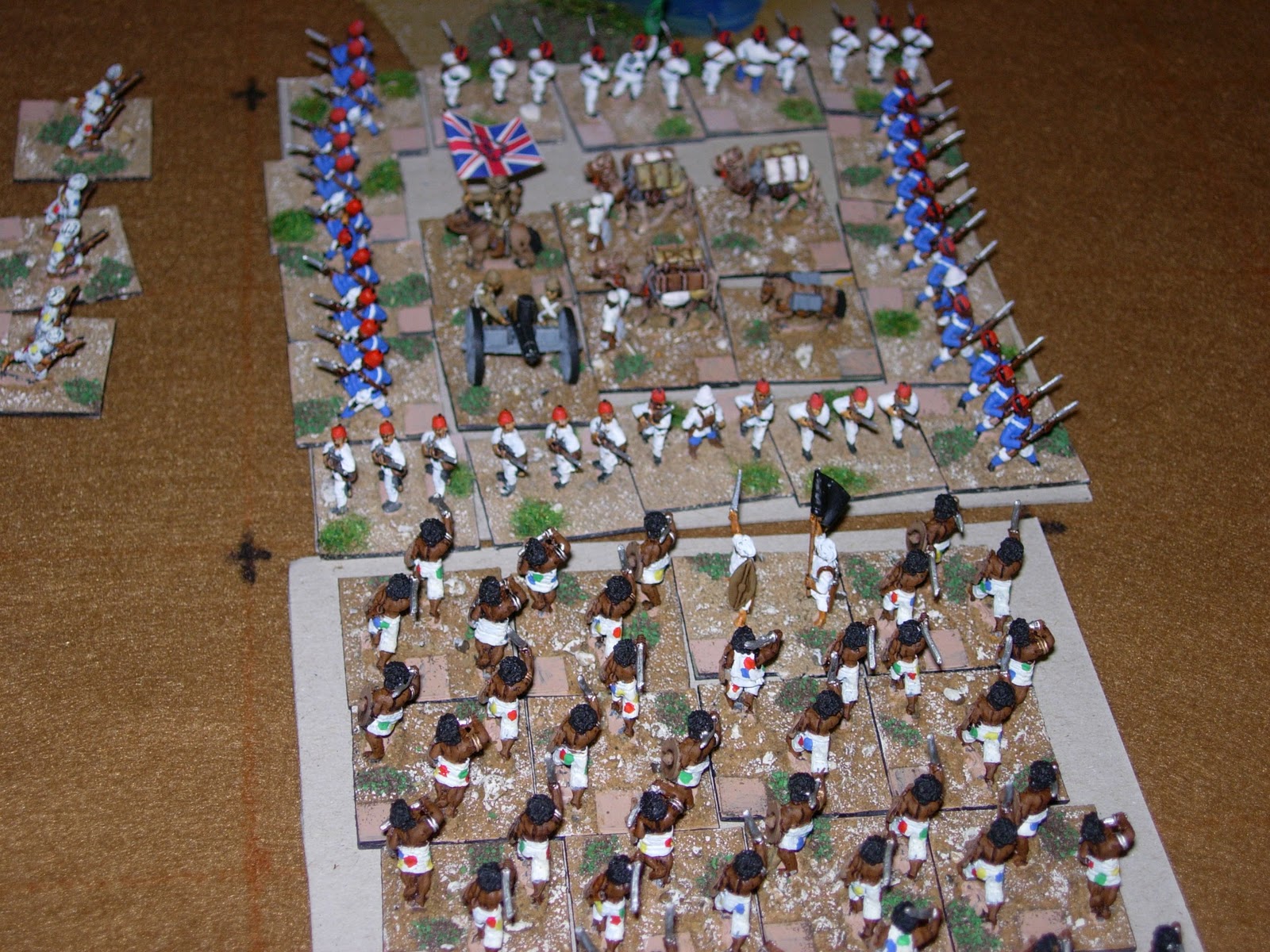
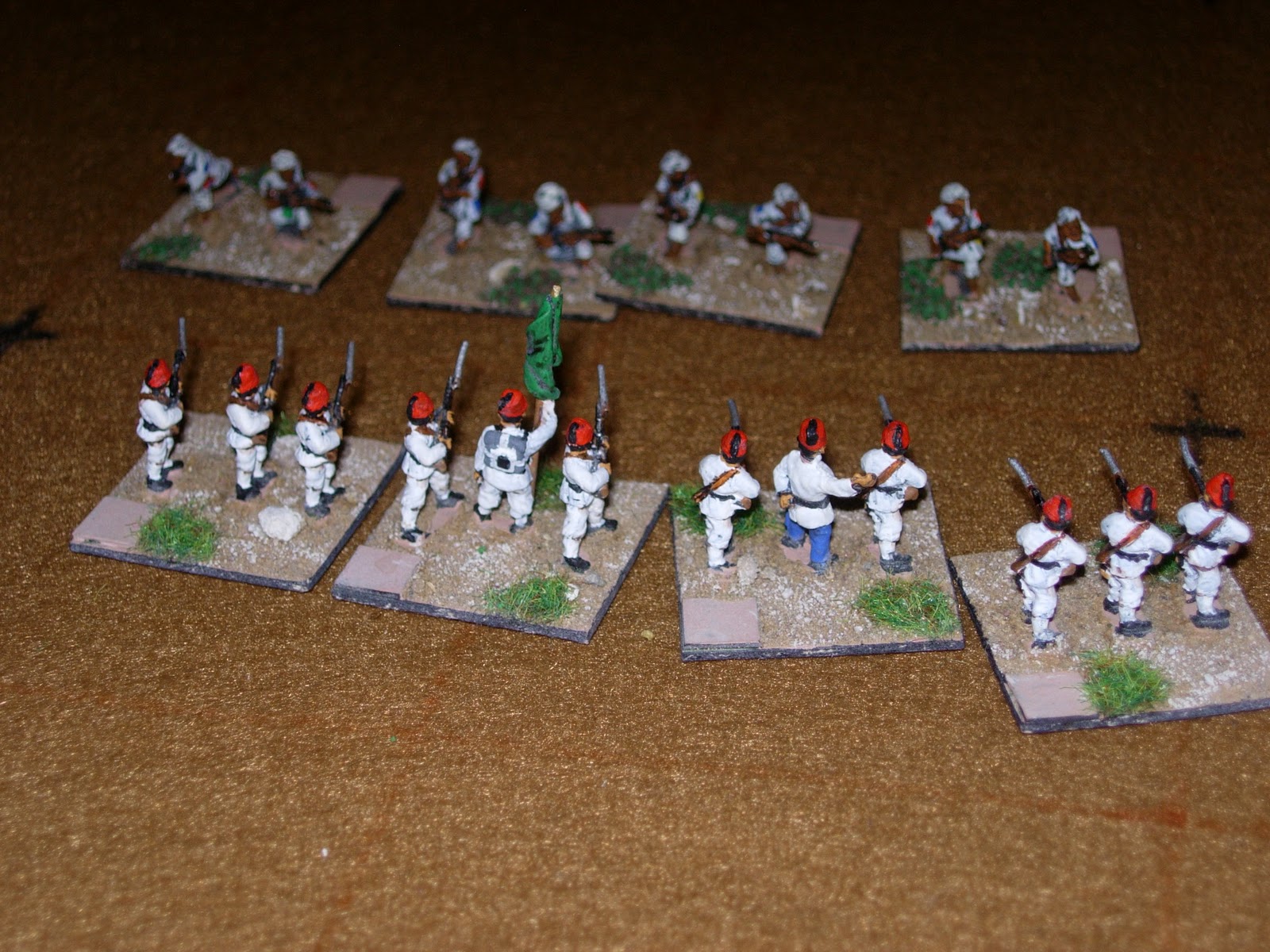
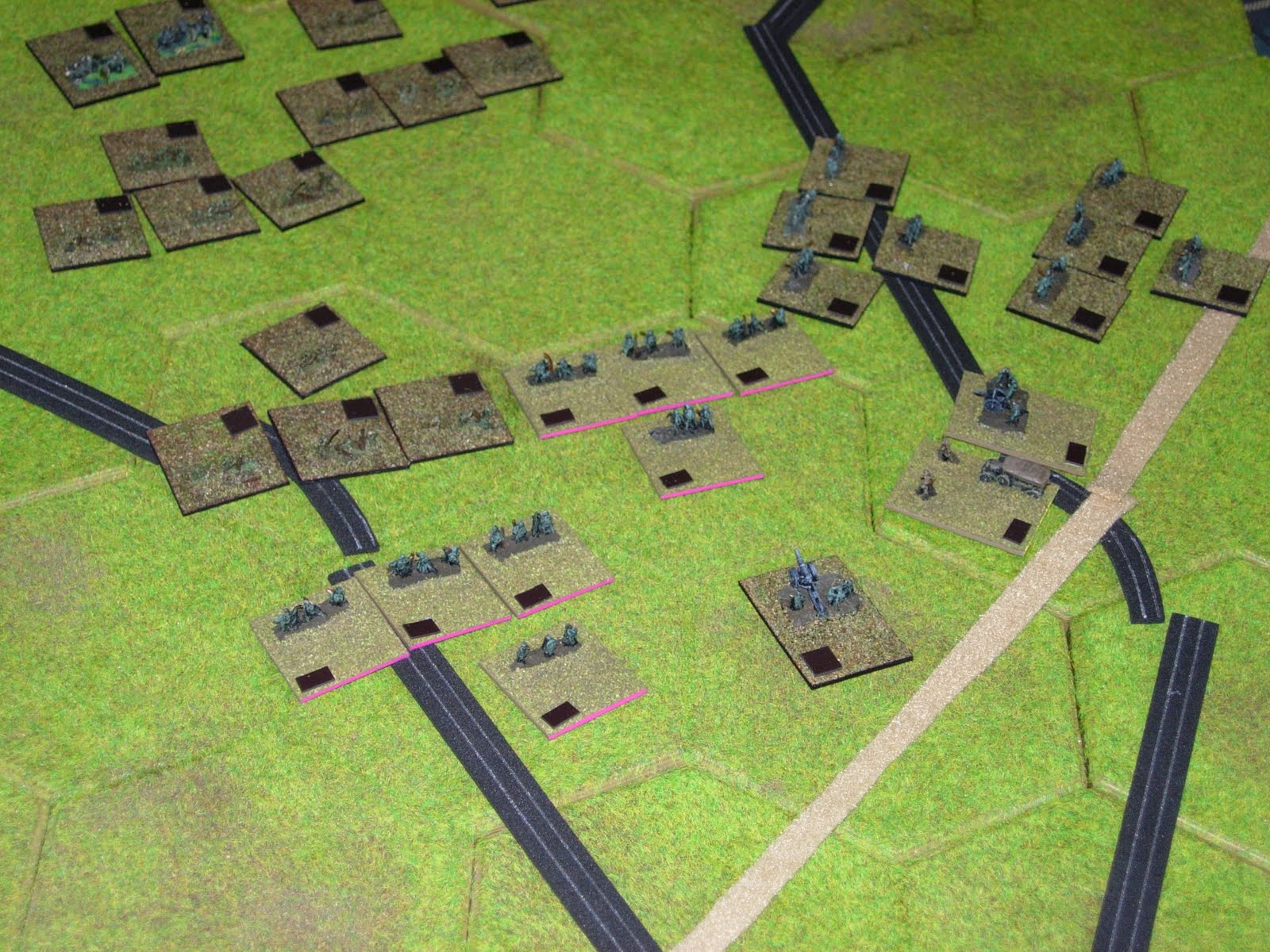
Further to my recent post about the ACW game Martin and I played with my 2mm toys, I have been in touch with the author of the rules, Richard Brooks. Richard has kindly given me permission to reproduce his rules here, Please respect Richard's intellectual property if you wish to make use of the rules.
I have included some notes in italics to illustrate the modifications I made for use with the 2mm toys.
TERRIBLE SWIFT RULES
by Richard Brooks
SCALE: 6cm square (7.5cm squared grid ) to 1000 yards, i.e. rifle musket range/Divisional front;
Divisional manoeuvre/combat unit (Divn):
2 figures ( 1 x2mm strip ) (on 30mm base) to 1500 men i.e. a Brigade;
1 (or two) gun model and 2 gunners per Artillery Battalion;
TIME: 1 turn to 60 minutes. At start of play dice for:
1) Start time = AD+5 (0700-1000hrs)
2) Dusk = D8: 12=1600; 34=1700; 56=1800; 78=1900hrs
NB: Daylight turns include dusk. After dusk resolve existing Combats, without initiating new ones.
PLAYING AREA:
1) Offset Squared board 10 rows across by 15 deep.
2) Clapboard liquor store 2 or 3 squares from the CSA baseline; the US objective.
3) At least two dozen trees to create areas of forest across the US line of march.
4) Two or three hills at least three squares by four with impassable cork peaks.
ORDERS OF BATTLE:
1) Orbats vary and should be concealed from the enemy:
a) CSA: 2-6 Divns each of 2-5 Brigades.
b) USA: 4-9 Divns each of 2-4 Brigades.
2) Each side has a set of force markers (FMs) to represent actual and possible Divn locations, identifiable as Decoys or Divns only from their rear edges, as follows:
USA(Blue) CSA(Grey) Identification
a) Infantry: 4 3 XXX
b) Infantry with artillery: 5 3 XAX
c) Decoys: 8 10 Blank
NB: Identification underlined when in column: invert FMs to indicate forming line.
3) On contact Divns roll AD for Brigades present: CSA=score; USA 2=2; 5=4; else=3
INITIAL SET-UP: Each side draws 12 FMs blind for the number of actual Divns and Decoys. Place them on the board in two echelons:
a) First 8 FMs drawn: 2 squares from their own baseline.
b) Last 4 FMs drawn along their baseline.
NB: Arty begins the game with a Divn, but may move independently once deployed.
FORMATIONS:
1) Column of March: Initial formation during approach to contact, one Brigade behind another. Never enter enemy adjacent squares in column.
2) Fighting Line: 1-3 lines of 1-2 Brigades each, all in the same square, except large Divns (4-5 Brigades) may spread out to defend 2 adjacent squares. Take a whole turn to regroup in same square.
NB: Change formation before/after movement, not during.
TURN SEQUENCE: Each turn move both sides together as follows:
1) Activation: Place face-up playing card by each Divn/Arty Battn/FM not whupped or currently engaged in Combat.
2) Initiative: Roll AD (+2 after Dusk; CSA -1): Invert all cards=<="">
3) Play each unit in turn, choosing the lowest card still to play:
a) Rally, Move or Conduct Reconnaissance, and replace card in the pack OR:
b) Invert card to show unit standing or entrenching (if in line).
-- Jokers allow play at any point in the turn. Aces count low.
-- Equal face value: move USA before CSA; less significant units before more.
c) Contact: when the unit currently in play moves into a square adjacent to one or more enemy units, stop and remove or deploy undeclared FMs as indicated below: Tim's note: Richard uses a table here which I found rather confusing. Basically use common sense and reveal blinds when a real unit appears in an adjacent square.
4) Return to (3) if cards still unplayed.
5) Conduct Bombardments and Combats between hostile units in adjacent squares.
6) End turn: place Entrenchment Markers, register time, collect cards and reshuffle. Return to (1).
MOVEMENT:
1) Roll D6 per Divn/FM/independent Arty Battn: +2 Columns of March
2) Use 2 points to move 1 square. Modify movement cost per square as follows:
-1 Entering Woods; Crossing contour; Entrenched; Line changing front 45o;
-2 Changing formation/unlimbering Arty; Line changing front 90o
NB: Arty can move and fire, but never enters enemy adjacent squares. Infantry attacking with Arty drops off the guns before moving into contact, so attacking Arty fires at two squares range. Defending Divns deploy their guns in the same square as the infantry, and fire at one square range.
3) Divns may move through Decoys, but not other Divns, except whupped Divns retiring through supports, who lose their next movement.
4) Units turn to face their expected target during Movement, not during Combat
RALLYING SHOOK UP TROOPS: Roll D6 >= 3: -1 in woods; per 1/6 lost.
RECONNAISSANCE: To identify a non-adjacent enemy FM as a Decoy or Divn, a Divn or FM representing a Divn rolls D6 (+1 uphill) >= twice the range in squares.
ENTRENCHMENTS:
1) Units in Line that do not Move or engage in Combat (i.e have a face down card at the turn end) may place a thin twig entrenching marker (EM) across their front.
2) If attacked roll D6=56 to count as entrenched: +1 CSA; 2 EMs; in woods
3) Remove Trenches and EMs when the entrenching unit moves off.
ARTILLERY:
1) Arty engages in normal Combat in self defence, or (during daylight) fires Bombardments in support of friendly units.
2) Bombarding Arty rolls D6 (CSA)/D8(USA) +1 Uphill/enfilade fire: Score >= twice the range in squares to deduct 1 from the target’s Combat die rolls. Do not engage targets beyond wood or hill crest squares.
3) Early rifled guns had a curved trajectory like howitzers, so Arty Battns may engage targets over intervening friendly units on the flat.
COMBAT: occurs between adjacent hostile units as follows:
1) Roll AD per Divn/Arty Battn (not firing bombardments), modified as follows:
+1 Fresh troops; Entrenched (not vs Flank Attack);
Standing Charge (i.e. face down card and enemy entered adjacent square);
-1 Under Bombardment or Oblique Attack; Shook Up; after Dusk;
- 2 Under Flank Attack
2) Multiply modified Combat die roll by number of figures:
x2 Gunners in self defence; x ½ firing at 45o to own front; Column of March.
3) Aggregate scores where several units attack one.
4) Compare totals for each opposing group of units:
Result: Action:
Beaten 3-to-1: Whupped: leave field at 2 squares/turn; Arty overrun
Beaten 3-to-2: Already Shook Up: Whupped as above
Else Shook Up: Beaten side suffers Loss
Else: Exchange Fire: Both sides suffer Loss
LOSS: Divns in Combat lose 1 figure per turn per enemy Divn engaged:
x ½ if entrenched – Roll D6=123 to confirm kills.
GENERAL RETREAT: Declare General Retreat to preserve the army from disaster:
1) Move any/all units 2 squares per turn towards own base line, regardless of initiative, until they have left the field. Once retreating units may not stop.
2) General Retreat cannot be reversed. No friendly forces (figures or FMs) may advance towards the enemy.